A Maltese company registered an EU figurative mark, CRASH birds, showing a red bird — for slot machines and casino services. Nothing to do with the mobile games Rovio is known for. That distance did not help. The mark was cancelled in full and the appeal dismissed, and the mismatch of sectors turned out to be part of the reason why.
What happened
On 15 November 2023 Eagleline Limited, a Maltese company, filed an application, and by March 2024 held a registered EU trade mark for the figurative sign CRASH birds. The specification covered classes 9, 41 and 42, all of it tightly drawn around gambling: slot machines, slot games, casino services, online gambling and software for such platforms.
In June 2024 Rovio Entertainment applied to have the registration declared invalid in its entirety, relying on bad faith at the time of filing as well as on similarity to its earlier marks and injury to their reputation.
The Cancellation Division upheld the application. The owner appealed, and on 10 August 2026 the Fourth Board of Appeal dismissed the appeal, confirming that the application had been filed in bad faith.
The signs before the Board
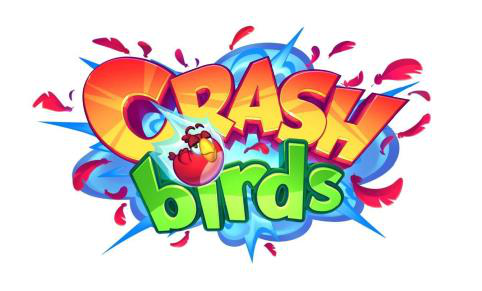
Contested mark
CRASH birds, EUTM No 18 950 941
gambling, casino, slot machines
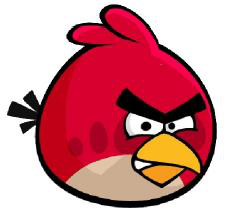
Earlier Rovio mark
the character Red, registered in 2010
plus the word mark ANGRY BIRDS
Images taken from the text of the Board of Appeal decision
First: reputation was proved properly
Rovio did not rely on assertions. The games in the series have been downloaded more than five billion times, and ANGRY BIRDS was at one point the most downloaded free game franchise in history. The file included franchise revenue in the billions, box office figures for the feature film, and a 2023 study putting global brand recognition at roughly 90 per cent.
One further point carried weight: in April 2023 Sega acquired Rovio for close to EUR 700 million. The Board noted that the purchase price itself confirms the substantial commercial value and strong market position of the earlier marks at the time the contested application was filed.
A detail worth remembering in practice: the Board accepted that press coverage of the game was almost always accompanied by images of the characters, above all the red protagonist. Both the words ANGRY BIRDS and the image of the red bird are therefore perceived by the public as pointing to one particular undertaking.
Second: the bird was not coincidentally similar
The protagonist of the game is a red cardinal named Red. His recognisable combination of features: red plumage over most of the body, a tuft on the head and another on the tail, a lighter belly, thick dark eyebrows giving the characteristic angry expression, and a yellow-orange beak.
The Board found that the bird in the contested sign reproduces most of those defining characteristics — red plumage, tufts on head and tail, a yellowish beak, a lighter belly.
The owner defended the mark on detail: a different pose, a neutral expression rather than an angry one, thinner eyebrows, a more pastel shade of red, a differently shaped beak. It also argued that the bird was a secondary element and that the word component dominated. The Board rejected that argument as well.
Third: knowledge that does not need separate proof
The reasoning here is simple and worth keeping in mind. At that level of reputation, the Board said, there can be no reasonable doubt that the applicant was aware of the ANGRY BIRDS marks when it filed.
Timing reinforced the finding. The application was filed on 15 November 2023, shortly after the Sega acquisition had been widely covered in industry and gaming media — that is, when the brand was at a peak of visibility.
Fourth, and most instructive: the different sector hurt rather than helped
One might expect gambling and casino services to sit far enough from mobile games for consumers that no conflict arises. The Board took the opposite view.
The fact that the contested mark was registered specifically for gambling, while the Rovio marks are known for mobile games, was treated as additional evidence of intent: the use of the word birds together with the image of a red bird in that context was not coincidental.
Put differently, the distance between the sectors did not explain the overlap away — it made it harder to explain. Genuinely independent creative development would be unlikely to arrive at that particular combination of elements in that particular field.
Fifth: no likelihood of confusion was required
This is probably the central legal point of the case. Bad faith is a standalone ground, and likelihood of confusion is not a precondition for it. Similarity between the signs is taken into account, but only as one factor in the overall assessment.
What is assessed is the applicant's intention at the time of filing. The Board concluded that the intention was to create, in the mind of consumers, a link between the applicant's services and the reputation of ANGRY BIRDS. Riding on the coat-tails of another undertaking's reputation has long been treated in EU case law as bad faith — taking advantage of the power of attraction of a well-known sign without any effort of one's own and without compensation.
What it cost
The appeal was dismissed and the mark cancelled in full, for all goods and services. The owner was ordered to bear Rovio's costs: EUR 550 for the appeal proceedings, and EUR 1,630 together with the cancellation proceedings.
The real loss is larger: EU filing and registration fees, its own representation across two instances over two years, and — most of all — a brand it had been investing in, gone with the registration.
Practical points for applicants and counsel
- “We are in a different sector” is not a defence. Against a well-known brand it can read as an argument for the other side: why that image, and why that word?
- “We changed the details” does not work either if the recognisable set of features survives. The assessment is of the overall impression, not a list of small differences.
- Filing dates speak. An application made shortly after a widely reported event involving a brand is a circumstance that will be noticed.
- Characters are assets. If your brand is recognised by an image, register the image and not only the name: here the figurative element carried the case.
- Clearance is more than a register check. A sign that looks formally available may still be too close to a well-known image — and that surfaces after registration, not before.
Why this matters if you are filing in Ukraine or the EU
Bad faith is not a peculiarity of EU law. Ukrainian practice applies a comparable logic, and a certificate obtained formally does not make a mark safe: it can be challenged a year or two later. For companies expanding across the EU and Ukraine, the exposure runs in both directions.
We handle Ukrainian filings for foreign applicants and act as local counsel for IP firms. If a sign is being cleared for a new market, the question worth asking before filing is not only whether the register is clear, but whether the sign echoes a well-known brand — even in an entirely different class. More on how we work with IP firms.
Send us the sign and the classes — we will tell you what the Ukrainian register shows and where the risks sit. Or write to info@patent.rv.ua.
Source: Decision of the Fourth Board of Appeal of the EUIPO of 10 August 2026 in case R 1791/2025-4 (CRASH birds (fig.) / ANGRY BIRDS et al.), cancellation proceedings No C 66 530, EUTM No 18 950 941. The decision in the EUIPO eSearch Case Law database.
Author: Volodymyr Tarasiuk, Ukrainian patent and trademark attorney, Reg. No. 529
See also: Free Ukrainian trademark search · Madrid designations in Ukraine